Monday, 13 October 2014
P6 PSLE Exams
This year I turned 12 years old and I had to go to the final year of primary school in Singapore. I was unable to write too many blog posts due to PSLE (Primary School Leaving Examination). But, I am now able to create some posts as the PSLE exam is over. Expect one this week.

Friday, 17 January 2014
Spirulina
During my visit to Myanmar over the holidays. I visited the Twin Taung crater near my home-town of Monywa. This is one of only three places in the world where a type of cyanobacterium (Google that yourself) called spirulina (to be more specific it is Arthrospira plattensis) is harvested and then exported to countries all around the world.
Notice on the map that there are four craters and they are in a straight line. I think that a meteorite came and hit the crater I have been to and then formed the others. The craters then formed lakes due to perhaps rainfall.
Spirulina is used in health and beauty products. It was first eaten by Aztecs who harvested it from Lake Texcoco then made it into cakes and sold them as described by Cortés's soldiers. It is also found in Lake Chad in Chad.
There are a lot of cattails around the lake and pagodas. It is 200m above ground level. The road leading to it is very bumpy and bullock carts are a common sight. There is a spirulina production factory there.
Conclusion: The view was phenomenal and although it smelled very fishy it was very cool as supposed to the freezing temperatures outside this crater.

Update: The amount of spirulina is decreasing and probably going to run out soon. 15/10/2014
Notice on the map that there are four craters and they are in a straight line. I think that a meteorite came and hit the crater I have been to and then formed the others. The craters then formed lakes due to perhaps rainfall.
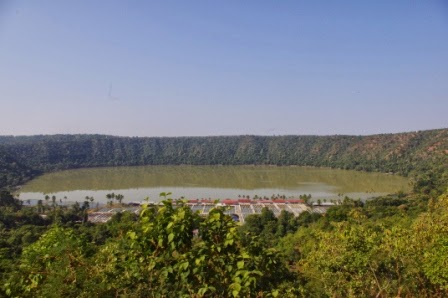 |
| Twin Taung |
Spirulina is used in health and beauty products. It was first eaten by Aztecs who harvested it from Lake Texcoco then made it into cakes and sold them as described by Cortés's soldiers. It is also found in Lake Chad in Chad.
There are a lot of cattails around the lake and pagodas. It is 200m above ground level. The road leading to it is very bumpy and bullock carts are a common sight. There is a spirulina production factory there.
Conclusion: The view was phenomenal and although it smelled very fishy it was very cool as supposed to the freezing temperatures outside this crater.

Update: The amount of spirulina is decreasing and probably going to run out soon. 15/10/2014
Sunday, 24 November 2013
Blue sky? Not!
| The sky |
It's just light playing tricks on you!
(I knew I was never a good poet)
| Sunset |
| A prism |
Oh and in case you are wondering why the sky is not violet, the shortest wave length, it is because some of it is absorbed by the atmosphere and our eyes are not that sensitive to it. Clouds are white because they consists of particles larger than the wavelengths so all of the colours are scattered equally.
| The structure of a type of terpene called Myrcene |
| Blue haze |
blue haze. This is because of terpene, which is a class organic materials from insects and plants, particularly conifers which is commonly found on mountains. These terpene chemicals react with the ozone layer and form particles around 200 Nano-metres across so they scatter blue light like the sky.
| A blue moon |
Conclusion: Because the science behind the topic is fascinating, I give it a 10/10!
Photo Credits:
The Sky: By Mohammed Tawsif Salam (Own work) [CC-BY-SA-3.0 (http://creativecommons.org/licenses/by-sa/3.0) or GFDL (http://www.gnu.org/copyleft/fdl.html)], via Wikimedia Commons
http://commons.wikimedia.org/wiki/File%3AAppearance_of_sky_for_weather_forecast%2C_Dhaka%2C_Bangladesh.JPG

Sunset: By Alvesgaspar (Own work) [GFDL (http://www.gnu.org/copyleft/fdl.html) or CC-BY-SA-3.0 (http://creativecommons.org/licenses/by-sa/3.0)], via Wikimedia Commons
http://commons.wikimedia.org/wiki/File%3ASunset_2007-1.jpg

A prism: By Spigget (Own work) [CC-BY-SA-3.0 (http://creativecommons.org/licenses/by-sa/3.0) or GFDL (http://www.gnu.org/copyleft/fdl.html)], via Wikimedia Commons
http://commons.wikimedia.org/wiki/File%3ADispersive_Prism_Illustration_by_Spigget.jpg

Blue haze: http://www.flickr.com/photos/peasap/2152975621/lightbox/
The structure of a type of terpene called Myrcene: By Ben Mills and Jynto [Public domain], via Wikimedia Commons
http://commons.wikimedia.org/wiki/File%3AMyrcene-3D-balls.png

A blue moon: http://spacefellowship.com/news/art17463/blue-moon-on-new-year-s-eve.html
Saturday, 2 November 2013
Video Game Review: Spore

Spore is a game where one can create their own creature and control it through the five stages of life in this game. It is quite old now. The storyline is that a meteorite crashes into the planet that you have selected and one of the fragments sinks into the sea. There your cell hatches and the game begins. This game does not have an ending. However, the main objectives of the entire game is to survive, get to the centre of the universe that you live in and defeat the Grox (you can also make friends with them but all the other species will instantly declare war on you and attack you).
| A cell |
The first stage is the cell stage where you have to eat plants or meat to survive and level up. You also collect cell parts either by finding meteorites or killing cells with cell parts that you do not have. You put these new parts on by accessing the creature creator. This stage is relatively easy.
| A creature |
 |
| A tribe |
 |
| A city |
 |
| Grox |
Conclusion: Spore is a great game and it has a lot of content. So much that I have only covered about 20% of the whole game! If you want to find out more then go to the Spore wiki. I give this game a 10/10.
Thursday, 17 October 2013
Sorry about the delay. Exam preparations and etc. A new post will be made soon! Meanwhile, try to sing this song!
Saturday, 10 August 2013
HD 189773b: The Blue Planet that Rains Glass
 |
| HD 189773b |
In space terms, this planet not far from Earth. It is actually a mere 63 light years (370,353,398,510,567 miles) away . So that is why Hubble and other telescopes that are orbiting Earth can see it in so much details. On October 5th 2005, an astronomer in France found this planet orbiting the star HD 189733a (note that our sun is also a star). It orbits the star at a speed of 341,000 mph (549,000 kph). In comparison, our Earth's average orbiting speed is 67,000mph(107,200 kph). This planet has a mass that is 13% more than the mass of Jupiter (which is the largest planet in our solar system and is made of gas). This makes it a hot Jupiter (which means it is a hot gas planet about the same size of Jupiter) and destroy almost all prospects of extra-terrestrial life. Every year on HD 189773b is equivalent to 2.2 Earth days because it orbits its star very closely.
 |
| A graph of the visible-light colours of planets including HD 189733b |
The blue colour of the planet is thought to have come from silicate particles which scatter blue lights. These particles, which are found in the planets atmosphere, then condense into glass due to very hgih temperature. That is why it rains glass.
Conclusion: It is very unusual to find a planet like this. However there is not a lot of interesting stuff about this planet because no extra-terrestrial life can survive there. I give it a 7/10
Image Credit:
HD 189773b: http://commons.wikimedia.org/wiki/File%3AHD_189733_b_deep_blue_dot.jpg:
By NASA, ESA, M. Kornmesser [Public domain], via Wikimedia Commons
Visible-light Colours of Planets: The colour of HD 189733b compared to our Solar system. Credit: NASA [This file is in public domain because it was solely created by NASA. NASA copyright states that "NASA material is not pretected by copyright unless stated"]
Sunday, 21 July 2013
Europa: A Possible Source of Extraterrestrial (ET) life?
In our Solar system, the planet Jupiter has 67 moons. Europa is one of those 67 moons. It is the sixth largest moon in the Solar System. It was discovered by Galileo Galilei in 1610. But what most people do not know was that Europa was possibly discovered by Simon Marius, a German astronomer, around the same time that Galileo discovered it. At that time people thought that it was just an insignificant and tiny dot in the sky, but recent studies suggest that Europa might be a potential harbour for life.
There is an ocean with liquid water beneath the icy crust! The reason? Tidal flexing which cause the ice to melt into water. What is tidal flexing? Well, it is hard to explain so click here to read an article about it. Anyway, scientists believe that life there could be similar to life found in the deep ocean (that region it also called the Hadalpelagic zone) on Earth.
Now, if your looking at the labels of this blog post you may be wondering what bullets have got to do with Europa. Well, researchers at University College London have designed a 19.6 kg bullet that is loaded with scientific equipments such as seismograph to measure tremors and a miniature chemistry lab to study the ice and the water beneath it. This giant missile could smash through the icy crust of Europa. This could be deployed around 2023 and it could answer one of the greatest mysteries in our solar system: Is there life on Europa (and if the answer is yes, whether it likes getting shot at by a giant bullet).
 |
| Europa |
There is an ocean with liquid water beneath the icy crust! The reason? Tidal flexing which cause the ice to melt into water. What is tidal flexing? Well, it is hard to explain so click here to read an article about it. Anyway, scientists believe that life there could be similar to life found in the deep ocean (that region it also called the Hadalpelagic zone) on Earth.
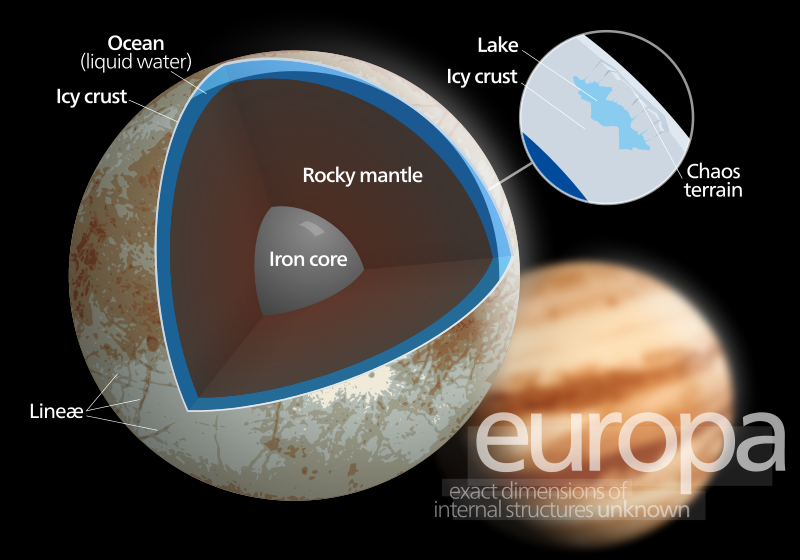 |
| The internal structure of Europa with Jupiter in the background |
Conclusion: Europa is a very exciting natural satellite (moon) and I love the simplicity the research plan. I think if there is life up there then it would look very familiar to tube worms and other deep sea creatures. For this innovative method and awesomeness at the prospect of finding extraterrestrial life that is so close to our planet, I give this research and Europa a 10/10.
Image credits:
Europa: Wikimedia Commons: http://commons.wikimedia.org/wiki/File:Europa-moon.jpg
The internal structure of Europa with Jupiter in the background:By Kelvinsong (Own work) [CC-BY-SA-3.0 (http://creativecommons.org/licenses/by-sa/3.0)], via Wikimedia Commons: http://commons.wikimedia.org/wiki/File%3AEuropa_poster.svg
Europa: Wikimedia Commons: http://commons.wikimedia.org/wiki/File:Europa-moon.jpg
The internal structure of Europa with Jupiter in the background:By Kelvinsong (Own work) [CC-BY-SA-3.0 (http://creativecommons.org/licenses/by-sa/3.0)], via Wikimedia Commons: http://commons.wikimedia.org/wiki/File%3AEuropa_poster.svg

Subscribe to:
Posts (Atom)